
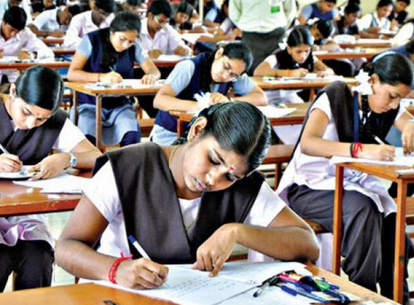
The recent CBSE exam paper leaks have brought to the fore the vulnerability of the CBSE itself to paper leaks. The CBSE exam procedures, tagged as amongst the best practices in the nation came in for a jolt. Exam leaks have become a more common affair not just in academics but also in professional circles. The reliability of various question papers set by the different staff selection commissions of various states in the country, is one’s own guess. There has been no dearth in scandals associated with paper leaks around the country and involvement of insiders, including even the selection board chairman. What come to the public domain are all unsuccessful leaks where the leak is exposed. Leaks can also be successful where a question paper had been leaked and one or many benefited from the leak, but was hidden from public. After all, we have all seen the Bihar toppers who couldn’t explain basic things, for whom political science was cooking. Given the stake involved with paper leaks, exam conducting boards now require to establish that their procedures are beyond malpractices.
Another aspect of exams is that question papers could end up being too lengthy or complex, like the CBSE class 12 math paper of 2016. There is definitely a need to put in a robust system that assures the people of the sanctity of the exam and at the same time rule out possibility of shocks of being above or below standard. So how do we arrest the leak and complexity of question papers; how do we identify appropriate people and robust procedures? In the first place we can safely conclude that leaks occur only due to dishonest activity of someone involved rather than any carelessness. So how do we ensure that we get only the right and honest people to work with our exam papers. This is mission impossible.
Question papers of many exam conducting bodies are developed by one or more unidentified individuals, selected based on a criteria, ensure no conflict of interest, like no relative taking a test, or not written a guide book, no private tuition etc. There is then on an exclusive review panel who check for complexity, syllabus, and marking compliance. A great system in place without doubt, beaten due to dishonesty (leak) and inefficient (complex papers) people. We thus infer that systems probably can be vulnerable wherever there is more human intervention and therefore an ideal paper would be moving away from this direction. How would it be if we are able to finalize a question paper, in the printer premises, minutes before the scheduled printing, a paper that cannot be a complex one?
Getting the entire question paper done by one individual raises the risk factor to the maximum. Getting about four or five papers from different individuals fare not much better either, with more people getting involved at the review stage. The submitted papers can be breached too, with students who could lay their hands on these can put an additional effort on those questions, and if that paper is selected, they get a jackpot. Vulnerability begins when the question paper is prepared. We therefore need to consider avoiding resourcing the question paper in one piece. All question papers in academic and almost all in professional circles have an identity , the pattern. Question papers have different sections with a corresponding marking schema. Likewise all subjects have several chapters. We can consider resourcing the paper in segments rather than in one single piece. For instance let us assume a question paper that has three sections A, B, and C as:
Section A: Choose any 10 from 12, each question carrying 2 marks and total 20 marks.
Section B: Choose any 5 from 7, each question carrying 6 marks and total 30 marks.
Section C: Choose any 5 from 7, each question carrying 10 marks and total 50 marks.
Assume the textbook has 15 chapters. About 4 two marks questions can be sought from a single identified contributor. Each question must be tagged with its chapter identifier. So we have 60 two marks questions from one individual, with their corresponding chapters identified. Likewise if we resource from another three individuals we will have in total 240 questions equally spread across all chapters. Similarly for section B we can resource about three questions per chapter per contributor. So if three questions are submitted per chapter, we have 45 questions per individual contributor and four contributors would mean 180 questions. On the same lines, another 180 questions can be resourced for Section C. The contributors must be sensitized to the fact that the questions must be framed only from the exam point of view rather than any other factor. The conducting authorities can decide how much a particular individual can contribute, within any section or even across sections too. It would be preferable to have separate contributors for the different sections for input variety and lowering risk. Two contributors from each section can be further tasked to review all submissions for their section.
The reviewer will ensure compliance to syllabus and complexity. They will review all the submissions except their own, which will be reviewed by the other reviewer. So we shall have 12 different contributors for a single paper of whom 6 are also reviewers. Using contributors as reviewers reduces the number of people involved. The conducting body can also consider new people too for review tasks, if necessary. So we now have 240 question for section A of which 15 will be selected, 180 questions for section B and 180 questions for section C from which 7 will be selected for each section. Each question is tagged with the chapter identifier. All questions have been reviewed twice, except reviewer’s own questions that have been reviewed once. A computer can now select the questions randomly. Criteria can be laid down like no chapter repetition within any section, no chapter repetition between B and C, all chapters must be present etc. An advantage here is that we can adjust emphasis to any particular chapter if needed.
We now have a question paper with all its questions selected, reviewed, with hardly any opportunity for being totally complex, and still a question paper set by none..
